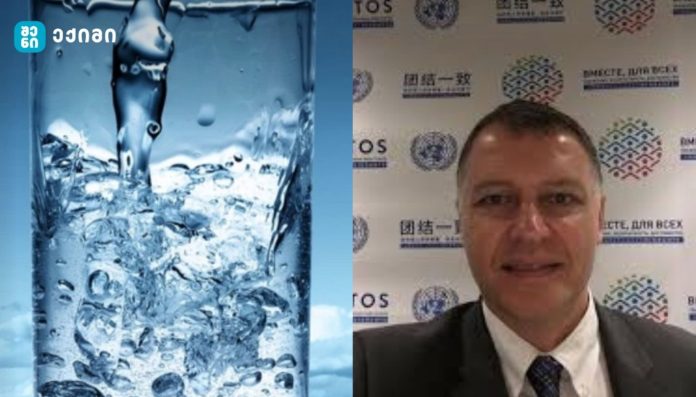
Building Skills for Humanity: How Global Competency Standards Are Transforming Refugee and Migrant Healthcare
By Professor Giorgi Pkhakadze
Chair, Public Health Institute of Georgia (PHIG)
Introduction
In an age of unprecedented global displacement, the delivery of equitable and culturally competent healthcare to refugees and migrants has become a public health imperative. According to the International Organization for Migration (IOM), more than 281 million people were international migrants in 2022, including over 36 million refugees and asylum seekers (IOM, 2022). The UNHCR adds that 117.2 million people will be forcibly displaced by mid-2024, a record high (UNHCR, 2024).
Migration—whether forced or voluntary—presents both challenges and opportunities for global health systems. While health disparities widen at the margins of society, the capacity of health workers to bridge these divides remains uneven. Refugees and migrants are more likely to encounter health systems that are unprepared to meet their needs, leading to fragmented care, miscommunication, and institutional distrust. These challenges are further intensified by limited legal access, cultural and linguistic barriers, and the psychological toll of displacement.
The COVID-19 pandemic exposed and exacerbated these structural weaknesses. Displaced populations were often excluded from national response plans, and front-line health workers reported significant gaps in preparedness to serve linguistically and culturally diverse groups. The consequence is not only diminished health outcomes but a failure of systems to uphold the principle of health equity.
In response to these realities, the World Health Organization (WHO) introduced the Refugee and Migrant Health: Global Competency Standards for Health Workers (GCS)—a transformative educational and ethical framework. The GCS defines the knowledge, skills, and attitudes essential for inclusive, high-quality, and rights-based care. By adopting and institutionalizing these standards, governments and health systems can move toward a more resilient, just, and people-centered approach to healthcare for all.
The Rationale for Competency-Based Standards
Displaced populations face a multitude of interlinked health risks that are often poorly addressed by conventional healthcare education and systems. These include untreated chronic diseases, high rates of maternal and child mortality, mental health disorders related to trauma and violence, and barriers to preventive services such as immunization. Migrants and refugees are also disproportionately affected by conditions such as tuberculosis, hepatitis, and malnutrition—yet few frontline providers are trained to address these vulnerabilities in a culturally competent manner.
Studies conducted by the WHO and IOM reveal that the lack of adequate training for healthcare workers contributes to delayed diagnoses, mismanagement of care, and even discrimination within service delivery. For example, in a 2022 survey of European primary care providers, over 40% reported uncertainty in communicating with migrant patients, while 30% expressed discomfort in dealing with mental health needs in displaced populations.
The WHO GCS framework is a direct response to these challenges. By focusing on five core domains—people-centeredness, communication, collaboration, evidence-informed practice, and personal conduct—it equips health workers with the tools they need to respond not only clinically, but ethically and compassionately. These domains reflect a shift from disease-centered to human-centered care.
Importantly, the competency standards are not limited to medical skills alone. They encompass attitudes and behaviors that support dignity, inclusivity, and non-discrimination. This approach aligns with the principles of Universal Health Coverage (UHC) and international human rights frameworks, particularly the International Covenant on Economic, Social and Cultural Rights, which affirms the right of everyone to the highest attainable standard of physical and mental health.
For health systems, the adoption of GCS facilitates better health outcomes, enhances trust among vulnerable populations, and increases the efficiency of service delivery by reducing fragmentation and duplication. For individuals, it creates an environment where they are more likely to seek care, adhere to treatment, and participate in public health programs.
Thus, competency-based standards are not only a professional necessity—they are a cornerstone of public health justice. They represent a shared global responsibility to protect the health of the most vulnerable, through care that is skilled, respectful, and informed by the realities of human displacement.
Global Momentum and Policy Integration
The Global Competency Standards have generated momentum at international and national levels, providing a policy framework that bridges education, service delivery, and workforce development. Numerous global health bodies, including WHO, IOM, UNHCR, and the OECD, have emphasized that building the competencies of frontline health workers is crucial not only for refugee and migrant health outcomes but also for broader public health system resilience.
The OECD has noted that countries investing in migrant-sensitive training experience measurable benefits, such as reduced hospitalization costs, improved patient satisfaction, and fewer delays in care access (OECD, 2021). Similarly, UNHCR data from 2023 shows that only 45% of forcibly displaced persons have unrestricted access to national health systems, underscoring the need for competency-based reforms that promote inclusion (UNHCR, 2023).
Policy integration of the GCS can take multiple forms. At the global level, WHO has aligned the standards with its Thirteenth General Programme of Work and the Global Action Plan for Healthy Lives and Well-being. In doing so, the GCS provides a technical entry point for countries aiming to achieve SDG 3 (health) and SDG 10 (reducing inequalities). For example, countries can incorporate GCS into national health workforce strategies, professional licensing frameworks, and quality assurance mechanisms.
In many regions, cross-ministerial collaboration is key. Ministries of health, education, and social welfare must coordinate to align curricula, accreditation standards, and in-service training pathways. Some countries are using GCS as a foundation for curriculum reviews in medical schools and integrating it into national continuing professional development (CPD) systems.
Despite this progress, several obstacles remain. Many low- and middle-income countries lack resources to fully implement new training systems. Health professionals may face disincentives such as time constraints, lack of accreditation, or limited awareness about the relevance of refugee and migrant health. Moreover, implementation requires strong monitoring systems, political commitment, and investment in faculty development.
The GCS, however, is designed to be adaptable. Its flexibility allows countries to apply it in ways that reflect local needs, whether through e-learning modules, community-based training, or formal inclusion in national health strategies. As such, it serves as a global public good—openly accessible and shaped by the principle of solidarity.
The next step lies in translating political endorsements into operational tools. Countries must create measurable action plans, assign institutional responsibilities, and secure budget lines to scale up competency-based healthcare delivery. This is not only a technical process—it is a strategic act of inclusion and justice.
Academic Institutions as Catalysts for Change
Academic institutions play an essential role in turning policy into practice. They are uniquely positioned to bridge the gap between international frameworks and local implementation by embedding the Global Competency Standards (GCS) into the formal education of future healthcare providers. This ensures that health professionals are equipped with relevant, context-sensitive competencies from the very beginning of their careers.
Globally, leading public health and medical schools are reviewing and revising their curricula to include migration-sensitive health modules. For example, in the WHO European Region, initiatives supported by the Association of Schools of Public Health in the European Region (ASPHER) have begun to pilot curriculum reform aligned with the GCS. These initiatives stress the importance of interdisciplinary training, which brings together students of medicine, public health, social work, and nursing to tackle the complexities of displacement in a holistic manner.
In Georgia, David Tvildiani Medical University (DTMU) has emerged as a regional leader by voluntarily promoting the GCS among its faculty and initiating curriculum reforms to incorporate these standards into undergraduate and postgraduate medical education. These efforts are aligned with the strategic objectives of the Public Health Institute of Georgia (PHIG), which is working to facilitate GCS uptake across academic institutions in the country. This model demonstrates how leadership from within the academic sector can accelerate national adoption and sustainability.
To support institutional transformation, WHO and its partners should invest in faculty development programs, including training-of-trainers, online resources, and mentorship exchanges. These capacity-building strategies will help academic institutions overcome common barriers such as limited teaching expertise, lack of standardized resources, and administrative resistance to curriculum reform.
Moreover, accreditation agencies should recognize and reward institutions that integrate GCS-aligned content. Linking GCS implementation with institutional performance indicators, academic rankings, and professional recognition can provide powerful incentives for schools and training centers.
Ultimately, educational institutions are not only engines of knowledge—they are engines of social change. Their leadership is critical to ensuring that refugee and migrant health is no longer treated as a niche topic, but rather as a core component of professional competency and public health excellence.
Strategic Recommendations
To ensure the long-term success of the Global Competency Standards, actionable strategies must be implemented at all levels—global, regional, and national. These strategies should not only promote the standards but also embed them into the fabric of health systems, professional development, and institutional culture.
Global Level:
- WHO should formally integrate the GCS into the upcoming Global Health Workforce Strategy 2024–2030, establishing them as a core benchmark.
- International agencies such as UNHCR and IOM should require GCS-aligned training as part of deployment for health workers in emergency or displacement settings.
- Global financing mechanisms—such as the Global Fund, Gavi, and the World Bank—should earmark funding for competency-based training in migration-affected contexts.
Regional Level (WHO Europe):
- Establish a Regional Competency Hub to provide technical assistance, training-of-trainers, and peer exchange among member states.
- Embed GCS into EU-supported CPD programs, academic accreditation frameworks, and cross-border collaboration initiatives.
- Promote the use of regional monitoring indicators to assess the effectiveness and reach of competency-based programs.
National Level (Georgia):
- The Ministry of Health should adopt a national directive mandating GCS integration across all medical, nursing, and public health training programs.
- PHIG and DTMU should co-lead a taskforce on GCS implementation and develop pilot programs in urban and rural settings.
- Allocate national budget lines to support translation, dissemination, and capacity-building for GCS.
- Develop national monitoring and evaluation tools to assess competency uptake and patient impact.
These recommendations are not merely administrative suggestions—they are a call to action for transforming healthcare delivery in a way that respects the dignity, complexity, and humanity of displaced populations.
Conclusion
The Global Competency Standards represent a bold and necessary shift in the way healthcare systems prepare, support, and evaluate their workforce in the context of growing global displacement. They offer a roadmap not only for improving service quality but also for safeguarding the dignity and rights of refugees and migrants who face compounding vulnerabilities in their quest for health and stability.
By placing the values of person-centeredness, equity, and professionalism at the core of clinical education and practice, the GCS signal a new era in global health—one that is grounded in inclusion, resilience, and responsiveness. For health systems to thrive in the face of increasing migration and diversity, their workforces must be trained not just to treat diseases, but to understand the social and cultural realities that shape health outcomes.
Georgia’s leadership, through the efforts of PHIG and David Tvildiani Medical University, underscores the power of national ownership, academic innovation, and strategic alignment. It is a model that can inspire other countries, especially those in the WHO European Region, to prioritize the health of displaced communities through systemic reform.
As the global community moves toward achieving the 2030 Sustainable Development Goals, the implementation of GCS provides an essential tool for reducing inequalities and ensuring that no one is left behind. But the time to act is now. The future of migration-aware, competency-driven healthcare depends on the commitment of policymakers, educators, institutions, and practitioners worldwide.
Competency is not just a technical skill—it is a reflection of our shared humanity.
References
- International Organization for Migration. World Migration Report 2022. Geneva: IOM; 2022. Available from: https://worldmigrationreport.iom.int/wmr-2022 (Accessed: 22 April 2025)
- World Health Organization. Refugee and Migrant Health: Global Competency Standards for Health Workers. Geneva: WHO; 2021. Available from: https://www.who.int/publications/i/item/9789240030626 (Accessed: 22 April 2025)
- World Health Organization. Thirteenth General Programme of Work 2019–2023. Geneva: WHO; 2018. Available from: https://www.who.int/about/what-we-do/thirteenth-general-programme-of-work-2019—2023 (Accessed: 22 April 2025)
- UNHCR. Global Trends: Forced Displacement in 2023. Geneva: UNHCR; 2024. Available from: https://www.unhcr.org/statistics/unhcrstats/667e2e7e4/global-trends-forced-displacement-2023.html (Accessed: 22 April 2025)
- OECD. Health of Migrants: Access and Outcomes in OECD Countries. Paris: OECD Publishing; 2021. Available from: https://www.oecd.org/migration/health-of-migrants-report-2021.htm (Accessed: 22 April 2025)


 F – Face / სახის ასიმეტრია